SOC 2 CC7 brings together five criteria for system operations. They cover vulnerability detection, unusual activity, event assessment, incident response and recovery. Use this hub to find the requirement behind a control gap and the guide that explains it. The work continues as systems change between audits.
Five system operation criteria
CC7.1
Vulnerability detection
Detect configuration changes that introduce vulnerabilities and identify systems exposed to newly discovered vulnerabilities.
CC7.2
System monitoring
Monitor unusual system activity and analyze the signals to identify events that need security review.
CC7.3
Event assessment
Assess security events for their effect on system objectives, then act on identified or potential failures.
CC7.4
Incident response
Follow the incident response process to contain the incident, address its effects and communicate the actions taken.
CC7.5
Incident recovery
Restore affected operations after an incident, investigate the cause and use the findings to improve recovery.
Gaps in alert delivery
An alert can be recorded without reaching the person who needs to respond. For example, a notification destination changes but the alert still goes to the old address. Logs continue to arrive, leaving an apparently working monitoring setup with no one reviewing its events.
Alert destination changes
Notifications stop arriving
Security events go unreviewed
Control repairs with ZeroTB
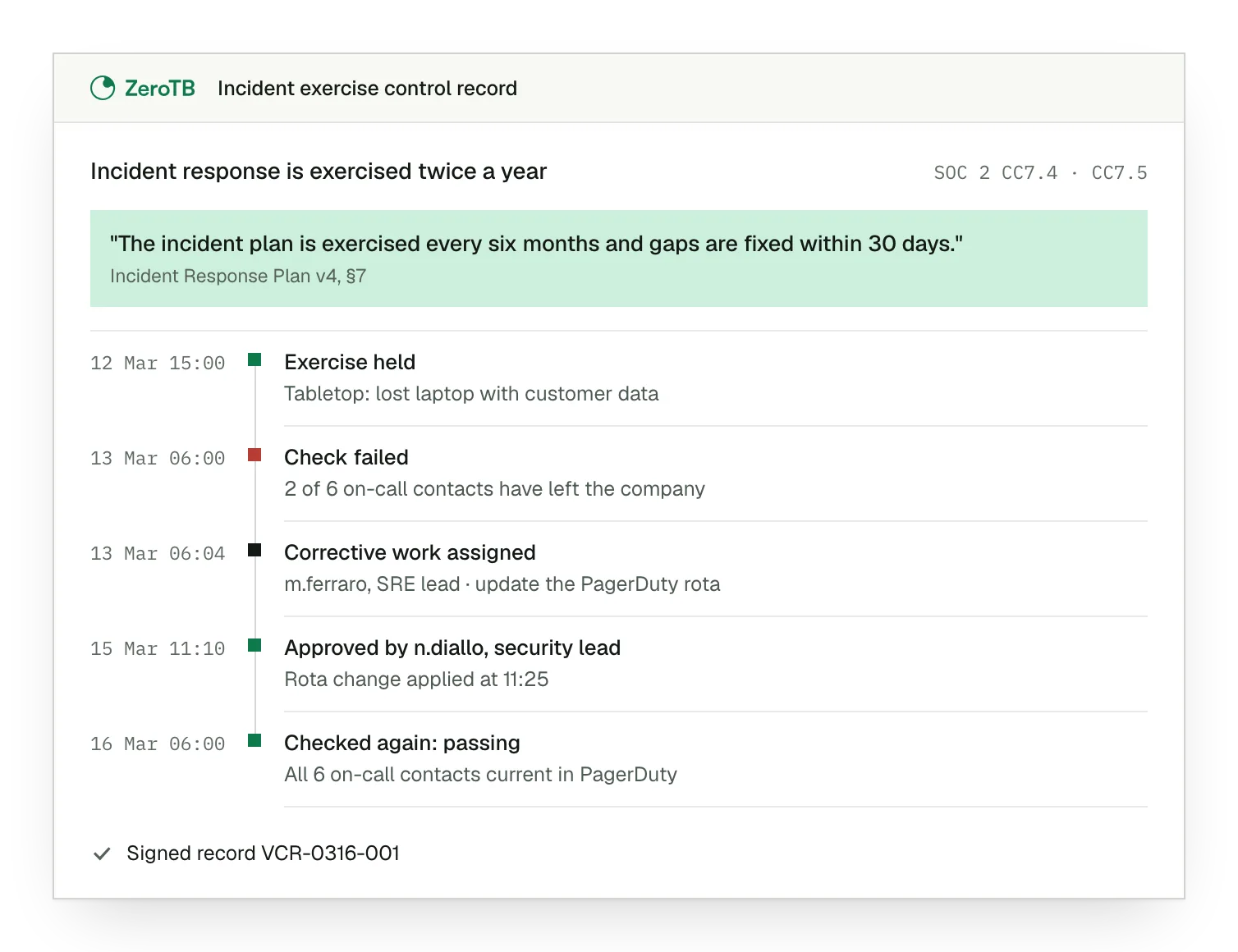
ZeroTB turns your system-operation commitments into daily checks and carries control gaps through to a verified repair. We draft the fix for your approval, check the resulting state and preserve the work in a signed Verified Control Record.
Checks follow commitments in your own report
Repairs cover systems and assigned process work
Records connect each repair to its evidence
Talk to our team
Talk through gaps in monitoring, incident exercises or recovery checks, and where your team needs help keeping controls working.
FAQ
Is our monitoring tool enough to cover CC7?
Monitoring is one part of the work. An event still needs assessment, and an incident requires a response and recovery. A tool that collects logs cannot establish that those later activities happened. These duties sit within the AICPA Trust Services Criteria.
What records help us demonstrate that these controls operated?
A reviewer needs to follow what happened after detection. The alert, assessment and incident decision explain why action was taken; response records and recovery checks show what followed. ZeroTB keeps a repaired control's commitment, before-and-after state, action, approval and verification in its Verified Control Record.
Can ZeroTB help with incident exercises as well as technical controls?
Yes. ZeroTB schedules incident exercises from the relevant commitment, assigns the work, escalates overdue tasks and verifies completion. Findings from an exercise can also reveal technical controls that need corrective work.
Who makes decisions during an incident?
The people responsible for your incident response process direct the response. Operators and analysts assess events, incident leaders coordinate action, and service owners and engineers handle recovery. ZeroTB's control work supports those responsibilities; your team retains material decisions and approval of proposed changes.
Can ZeroTB keep records of our SOC 2 control work?
Yes. ZeroTB keeps the commitments, checks and repair evidence for your SOC 2 program. We handle control repairs and retain the evidence. Compliance and engineering can then see the change and the check that established whether it worked.
Which CC7 gap makes a useful starting point?
Start with a recurring failure, such as a broken alert route or an overdue incident exercise. The commitment needs to be clear enough to check whether the repair worked. We can discuss recurring problems with your team and choose the starting point together.
Start with the Pilot
In the eight-week Pilot, we map up to 25 commitments from your report and take two real control gaps through verified restoration. You receive the completed repairs and the records of what changed, who approved it and how we checked the result.