A SOC 2 Type 2 audit examines how a service organization describes its system, designs its controls and operates them over a specified period. The auditor needs evidence from that period to assess their effectiveness. Agree the scope and dates first, then keep the history of checks, failures and corrections as the systems change.
A control described in last year's report may now cover a different set of systems. People have left, repositories have been added and the release workflow has changed. Preparing for the next examination means accounting for what those changes did to the controls.
Report types
Type 2 extends the examination to how controls worked during the reporting period. A point-in-time report addresses the system description and the design of controls at a particular date. Type II uses Roman numerals for Type 2; the two names refer to the same report.
| Report feature | Point-in-time report | Type 2 report |
|---|---|---|
| Time covered | A specified date | A specified period |
| Control design | Examined at that date | Examined across the period |
| Operating effectiveness | Outside the opinion's scope | Included in the opinion |
| Tests of operation | No period-wide test results | Tests and results included |
What the customer wants to know matters here. If its question concerns control design on a date, a point-in-time examination may be sufficient. If it asks how controls worked over time, discuss a Type 2 engagement with the CPA firm and agree the relevant period.
System scope
The system boundary determines which services, people, processes and technology the auditor examines. Relate that boundary to the service customers use and the commitments made about it. A broad company description alone cannot identify every system where a control needs to operate.
The selected Trust Services Criteria provide the basis for evaluating those controls. Security, availability, processing integrity, confidentiality and privacy address different concerns; the engagement identifies the categories in scope. The SOC 2 framework guide explains how the criteria relate to a compliance program.
Audit schedule
The observation period is one part of the schedule for obtaining a report. Before it begins, the company addresses readiness gaps. During it, the controls operate and produce evidence. The CPA firm needs time to complete the examination before it can issue the report.
Work back from the date when customers need that report. Discuss the period, evidence requests and time for unresolved issues with the auditor. Agree who handles readiness work as well as the examination itself, and which work the audit fee covers.
Evidence across the period
Evidence needs to show when each control operated and which systems or activities it covered. A completed access review, for example, should identify the accounts reviewed and the decisions made. A current account export answers a different question about the access that exists today.
The control's stated frequency determines the history needed to explain its operation. A quarterly review and a check on every production change produce different records. Keep dates, scope and results together, so the auditor can relate the evidence to the relevant control and period.
Coverage as systems change
New systems can fall outside checks that still work on older systems. A repository added during the audit period might have different review settings from the rest. Checks on the existing repositories would leave that gap unseen, even if every one of them passed.
Coverage needs to change with the service. Connect the list of systems checked to the current service boundary, including new accounts, applications and release routes. Keep the date a system entered scope and the checks that applied to it, so the change remains understandable later.
Missing and failed checks
When a check has no current observation, the team cannot establish the control's condition from it. The connection may have stopped working, or the last result may be too old. Someone needs to investigate that missing evidence and record which part of the period it affects.
A failed check is different: the observed condition does not meet the approved requirement. Keep the distinction visible in the history. Reconnecting a system can restore current observations, but any earlier gap still needs an explanation using the evidence available for that time.
Approved repairs
Closing a repair requires a fresh check of the condition that was wrong. The approved commitment defines the expected result. Compare it with the observed gap, propose the correction and obtain the responsible person's approval. Test the resulting condition after the change takes effect.
This is the work ZeroTB carries through to a signed Verified Control Record. It contains the commitment, before-and-after state, action, approval and verification. With those details together, the reviewer can understand the decision to close the gap and the auditor can assess the evidence.
Repeat audit readiness
The third audit still needs its own operating history. Earlier reports identify commitments and problems to revisit, but they describe the service as it was then. Establish whether each control's owner, scope and method remain appropriate for the service in the new period.
The immediate repair may have worked even when a finding recurs. A later change can undo it, and the team can miss that change if ownership ended with the ticket. Continued checks need an owner who can arrange a response when the condition returns.
Coding-agent changes
Coding agents can change the systems that enforce development controls. A new repository, altered workflow or infrastructure change can affect required review, tests or access. The same approved change controls apply to this work, including changes made by either an agent or a developer.
Keep the review and the affected controls connected to each relevant change in the operating record. If an agent creates a different release route, check the requirements on that route too. Coding-agent compliance support covers this work as development systems change.
Readiness support
A readiness platform should let the team trace a control's history across the reporting period. Look for dated observations, visible gaps and evidence of approved corrections. A current status is useful, but reviewers also need to understand how that state changed and why.
Choose support according to who will investigate and repair failures. Engineers with time assigned to control maintenance may own that work internally. Teams without that capacity may need ongoing service. ZeroTB keeps the commitments, checks and evidence together as its operational compliance support supplies the repair work.
Report review
Read the report's opinion with the period and system description it refers to. These set the boundaries of the independent CPA firm's conclusions. The tests and results explain the work behind them, including any exceptions; the AICPA report review checklist also covers significant system changes.
That reading should carry into the next period. Give findings an owner, and keep the work to address them connected to the controls concerned after the report arrives. The SOC report guide explains the report's contents and how to interpret the scope of its conclusions.
Example of preserving a repair history
A verified repair belongs beside the failure it corrected. Consider a new repository where changes can proceed without required review. Once the owner approves a rule correction and a check confirms it works, the record can show when the requirement failed and when it held again.
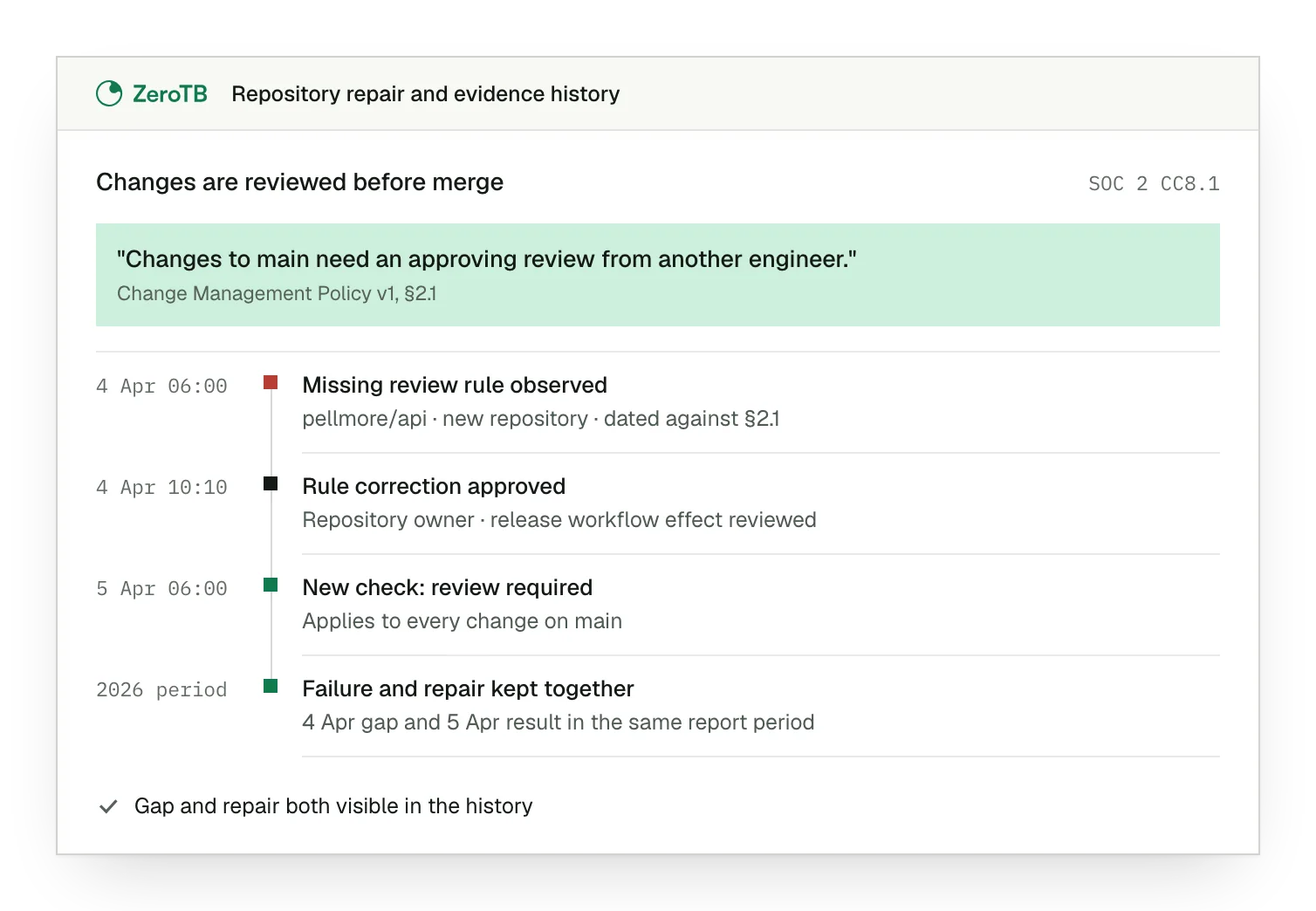
Missing review rule. The new repository permits changes without review, and the dated observation records that gap against the commitment.
Approved rule change. The proposed correction identifies the rule to change, with the repository owner approving the release-workflow effect.
Verified review requirement. The result of a new check shows that the required review now applies to repository changes.
Retained gap history. Both observations remain available with their dates, so the repair leaves the earlier failure visible.
Type 2 readiness checklist
Check the agreed service boundary and criteria alongside the observation dates and the expected date of report delivery.
Compare the records for a control with its stated frequency and identify any activities missing from the history.
Identify new systems and checks with missing or stale observations, and confirm that someone is investigating the affected period.
Read a closed repair's approval and verification result with the observation that showed the gap before the change.
Identify the owner who continues checks after closure and the route for sending later failures to the responsible team.
Sources
- AICPA & CIMA, System and Organization Controls: SOC suite of services, accessed November 2026.
- AICPA, SOC 2 report review checklist, accessed November 2026.
- ZeroTB, Recurring SOC 2 findings, 2026.
Related pages
Coding-agent compliance
Keep development controls covered as agents change code, repository settings and release workflows.
Healthtech compliance
Connect operating controls with the requirements that healthtech teams manage across compliance programs.
SOC report interpretation
Understand the system boundary, auditor's opinion and test results within a SOC report.
Start with the Pilot
The eight-week Pilot maps up to 25 commitments and takes two real control gaps through verified restoration. Talk with our team about the controls that need attention between audits and how the Pilot could help.