SOC 2 CC1 covers how leadership sets expectations and gives people the authority, skills and accountability to run controls. Its five criteria address the conduct, oversight and responsibilities behind those controls. Use the guides below to understand each duty and the evidence that shows it is being carried out.
Five control environment criteria
CC1.1
Ethics and integrity
Leaders establish expected conduct, apply it in their own decisions and respond when people fall short.
CC1.2
Independent board oversight
The board reviews how management develops and operates controls, with sufficient independence to question its decisions.
CC1.3
Authority and responsibility
Management assigns control duties through clear reporting lines, giving people the authority needed to carry them out.
CC1.4
Skills and development
The company hires, develops and retains people with the skills to perform their control responsibilities.
CC1.5
Accountability for controls
Managers review how people perform their control duties and address missed responsibilities through appropriate corrective action.
Unassigned control duties
A change in leadership or reporting lines can leave a control without anyone responsible for carrying it out. The policy still names a role, but the review goes to someone who has left. The next deadline passes without the work being completed.
A control owner leaves
The assignment stays unchanged
A required review is missed
Ongoing work with ZeroTB
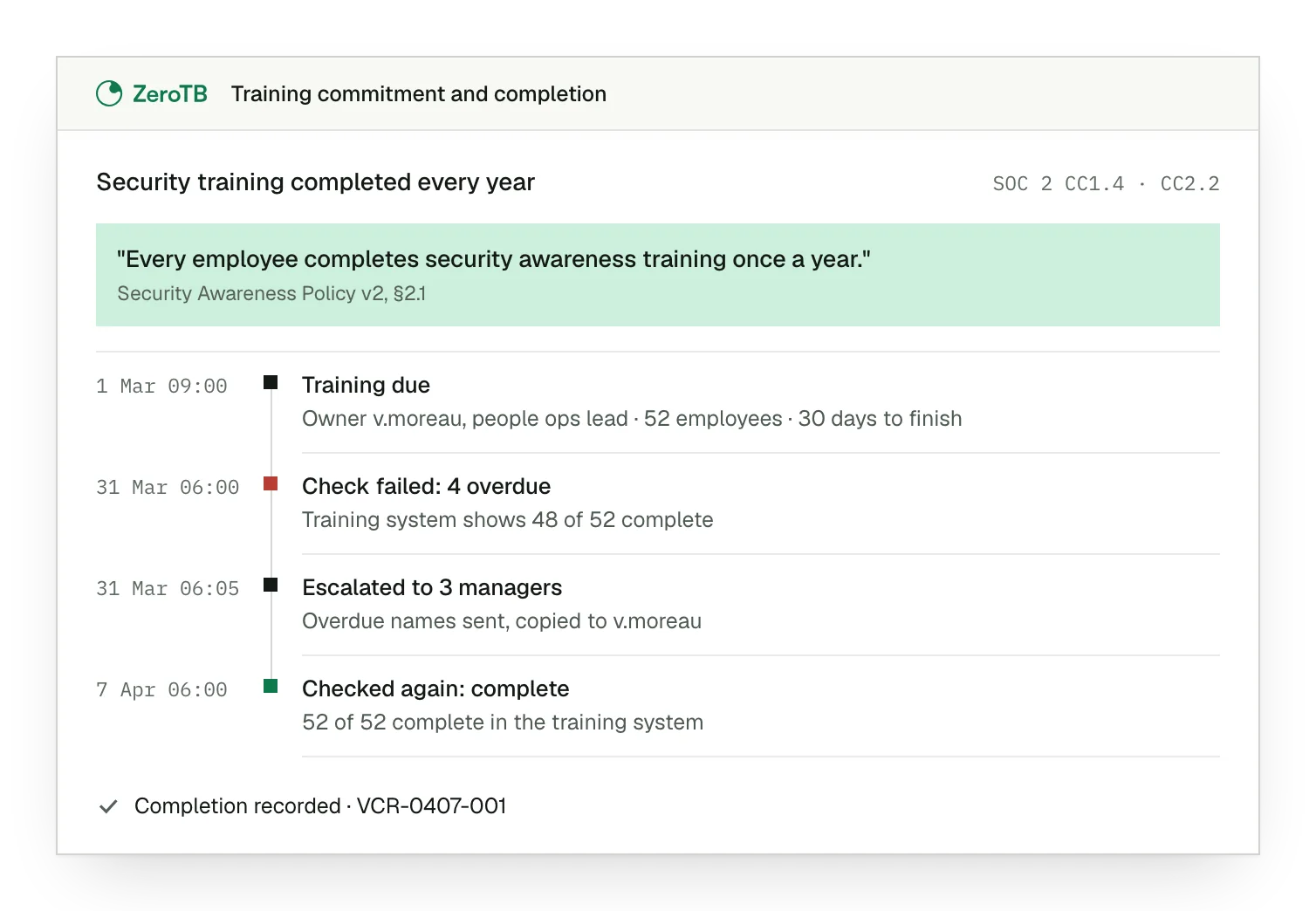
ZeroTB takes on the recurring work behind your people and process commitments. We read the report, check whether agreed duties were completed and propose corrections for approval. We verify the completed work and retain its evidence in a signed Verified Control Record.
Training and reviews have assigned owners
Overdue duties go to the responsible person
Completion checks support the evidence record
Talk to our team
Talk with us about missed reviews, changing control owners and the work needed to keep governance commitments operating.
FAQ
Who needs to be involved in CC1 work?
Leadership sets expectations and retains responsibility for oversight and accountability. People operations and operational managers contribute to hiring, training and performance reviews. Compliance connects those activities to the program's commitments. ZeroTB supports recurring control work while your leaders make decisions about conduct, authority and people's responsibilities.
What evidence helps show that CC1 duties are being performed?
The evidence depends on the duty. Oversight minutes show the issues a board considered; training records show completed learning; follow-up records show action on missed responsibilities. The child guides explain evidence for each criterion. A policy explains the expectation, while records of completed work show how it was applied.
When should CC1 arrangements be reviewed?
Changes in leaders, reporting lines or important responsibilities are reasons to revisit the arrangements. Scheduled reviews can also reveal duties that have become unclear. Where a role changes, the review should address who now owns its controls, who can approve decisions and who receives unresolved issues.
Is completed training enough to demonstrate competence?
Training completion is one part of the evidence. CC1.4 also concerns whether people have the skills to perform their assigned duties. Hiring practices, development and plans for replacing key staff help explain how the company maintains that ability as its people and responsibilities change.
Can we keep CC1 control evidence in ZeroTB?
Yes. ZeroTB keeps the CC1 commitments, checks and evidence of completed work together. You can review the evidence of completed work in ZeroTB and retain a portable copy. The commitment provides the connection between the requirement, the work and its evidence.
How does CC1 connect to the wider SOC 2 program?
CC1 provides the people and governance arrangements on which other controls depend. An access review needs an owner who understands the task and has authority to act on the findings. The SOC 2 framework overview places that work alongside the criteria for information, risk assessment and control activities.
Start with the Pilot
The Pilot lasts eight weeks. We map up to 25 commitments from your report and take two real control gaps through verified restoration. You receive working controls, with portable evidence that records the corrections, approvals and verification.