SOC 2 CC9 covers business disruption and risks from vendors and partners. A recovery plan or supplier assessment needs to reflect the service as it runs today. The work continues after the audit: dependencies change, reviews come due and findings need a response.
CC9 criteria and guides
CC9.1
Business disruption planning
CC9.1 concerns the plans and measures that help a business meet its objectives when operations face disruption.
CC9.2
Vendor and partner risk
CC9.2 concerns the risks that suppliers and business partners introduce, and how the company assesses and manages them.
Changes between risk reviews
Disruption plans can miss a dependency that has changed since the last review. A recovery process may now rely on an external service. If the plan still describes the old arrangement, the next exercise leaves the team with unanswered questions about the supplier.
A recovery dependency changes
The plan stays unchanged
Supplier responsibilities remain unclear
Ongoing CC9 control work
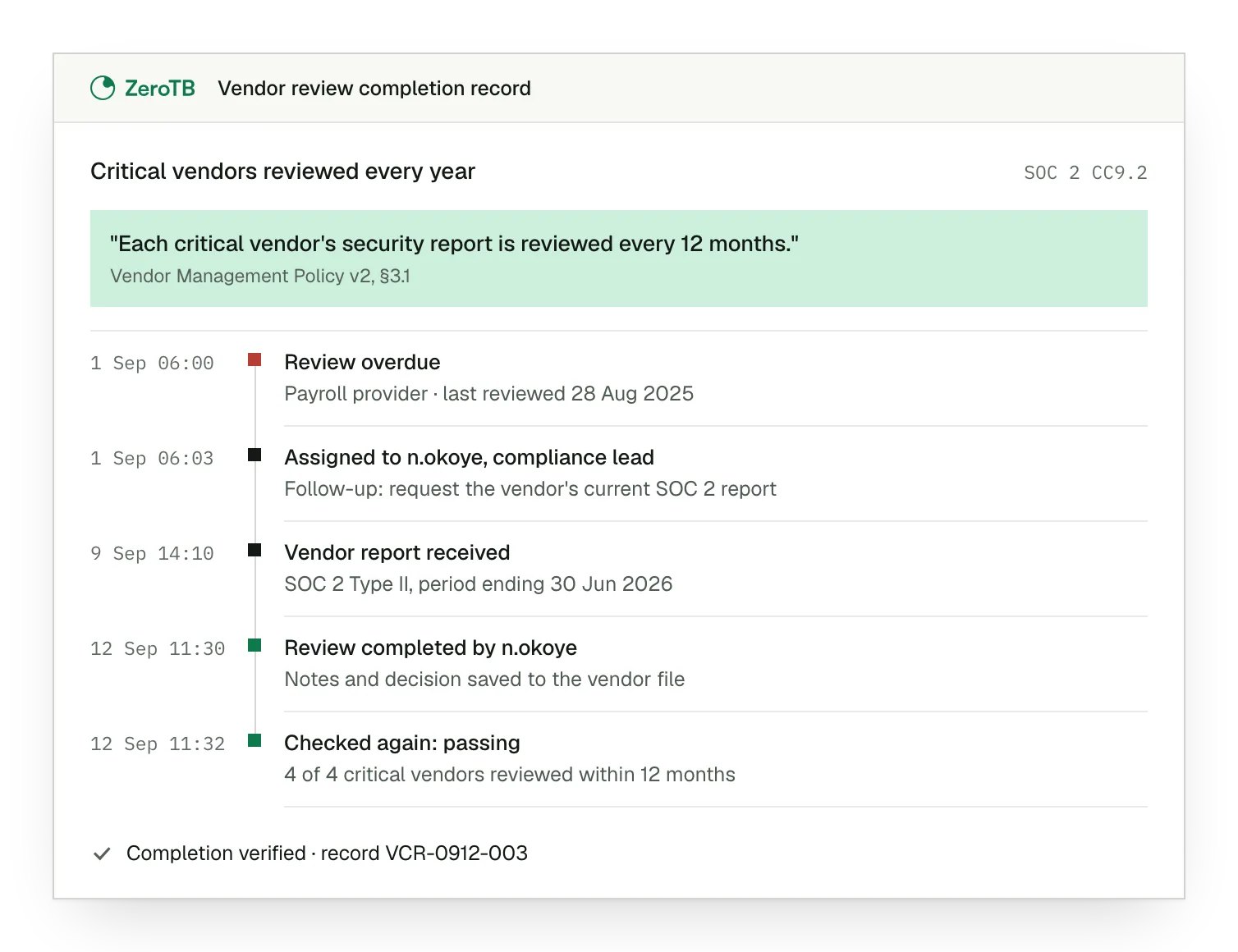
ZeroTB takes responsibility for following agreed CC9 control work through to a verified result. We read the commitment and check whether the work happened. When it has not, we propose a correction for approval, verify its completion and produce a signed Verified Control Record.
Reviews follow the schedule in the commitment
Overdue work reaches the responsible owner
Completion includes evidence of the work
Talk to our team
Talk with us about overdue vendor reviews, changing service dependencies and the CC9 work that keeps returning to your team.
FAQ
What evidence helps explain whether our CC9 controls are working?
Useful evidence includes the plans, assessments and completed work behind the controls in your report. For disruption planning, that can include exercise results and the actions they prompted. For suppliers, it can include assessments, agreed responsibilities and follow-up on identified problems. Together, those records connect the requirement to what happened.
How often should disruption plans and vendor assessments be reviewed?
The review schedule follows your commitments and the risks of the service. A change to an important supplier, service or recovery dependency can also call for a review. That review establishes whether the existing plan or assessment still covers how the service operates.
Who decides whether to accept a supplier risk?
Your team decides which supplier risks to accept. That decision depends on what the business needs and what it has promised. ZeroTB handles the agreed control work, while people approve material actions and own legitimate exceptions. Recording a review as complete does not authorize an exception.
How does CC9 relate to risk assessment and incident recovery?
CC9 addresses disruption and third-party risks. CC3 risk assessment looks more broadly at risks to the company. CC7.5 incident recovery concerns the work of recovering after an incident. The SOC 2 framework overview explains where these criteria sit within the wider set.
Can ZeroTB keep evidence of completed vendor review corrections?
Yes. ZeroTB keeps the commitments, checks and evidence of completed vendor review corrections. ZeroTB produces a Verified Control Record for completed corrections. It contains the commitment, what changed, who approved the action and how the result was verified, including the state before and after the work.
What happens when the evidence for a completed review is missing?
The control remains unverified if the evidence cannot support that conclusion. ZeroTB keeps unknown, stale and disconnected states visible. A review may have a completion date, but that date alone cannot establish what the review covered or whether the required work took place.
Start with the Pilot
The Pilot gives you eight weeks of control work: ZeroTB maps up to 25 commitments from your report and takes two real gaps through verified restoration. You receive working controls and portable evidence records, and approve material changes.